×
![Popup Image]()


A wedding story set at The Leela Palace Jaipur, Rajasthan
The first thing Aisha noticed was the silence. Not the absence of sound, but the kind of hush that falls over a courtyard when two hundred people hold their breath at once. It was just past six in the evening on July 11, 2026. The sky above The Leela Palace Jaipur had turned the color of ripe mangoes, and a warm wind carried the scent of jasmine from the gardens below. She stood at the edge of the marble veranda, her lehenga catching the last light, and watched Rohan walk toward her through a tunnel of marigold and fairy lights.
That was the moment. Not when the pandit began the mantras. Not when the fire was lit. But that single walk — slow, deliberate, surrounded by the people who mattered most — that defined what this Jaipur wedding story was really about.
If you're picturing what a wedding in Jaipur could feel like — this is the kind of day we mean.
Aisha and Rohan did not start out wanting a palace wedding. They started out wanting a wedding that felt like them — warm, unhurried, deeply rooted in tradition but free of unnecessary spectacle. They had attended a cousin's wedding in Udaipur two years earlier and remembered how the city itself seemed to participate in the celebration. The pink sandstone, the narrow lanes, the way history sat comfortably beside modern life. Jaipur felt like the natural next step.
The Leela Palace Jaipur, set in the serene Jal Mahal vicinity with views of the Aravalli hills, offered something rare: the grandeur of a Rajasthani palace without the impersonal scale of a convention venue. For a guest list of 200, it felt generous but never empty. The property's Mughal-inspired gardens, reflection pools, and sandstone corridors provided backdrops that needed no decoration — only enhancement.
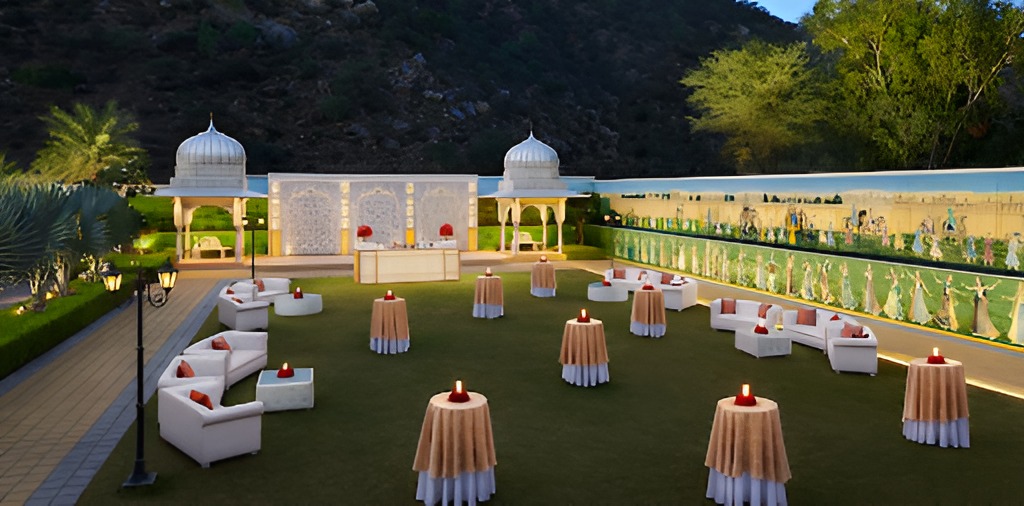
When the couple first walked the property with their Jaipur wedding planners, the decision was immediate. The courtyard where the phera would eventually take place had an ancient banyan tree at its center. The tree had been there for over a hundred years. They decided the mandap would be built around it.
Two hundred guests. That number is worth pausing on, because it sits at an interesting intersection — large enough to feel like a true celebration, small enough that the couple could speak to every single person who traveled to be there. In the world of destination weddings, this is what many couples now call an intimate wedding Jaipur experience. It is not about the size of the guest list. It is about the quality of attention each guest receives.
Aisha and Rohan wanted their families to feel hosted, not managed. Every guest received a hand-written note in their room upon arrival, along with a small jar of locally sourced gulkand and a printed itinerary that felt like a storybook rather than a schedule. The couple had thought carefully about who needed elevators, who preferred ground-floor rooms, which elderly relatives would need shaded seating during the daytime events. These details do not show up in wedding photographs, but they show up in the memories people carry home.
The mehendi was held on the palace lawn under a canopy of white muslin and marigold. The morning began slowly — cups of masala chai, the sound of a local folk singer, and the gradual gathering of women in yellow and green. Aisha sat on a low velvet seat while two mehendi artists worked on her hands simultaneously, their cones moving with the precision of calligraphers.
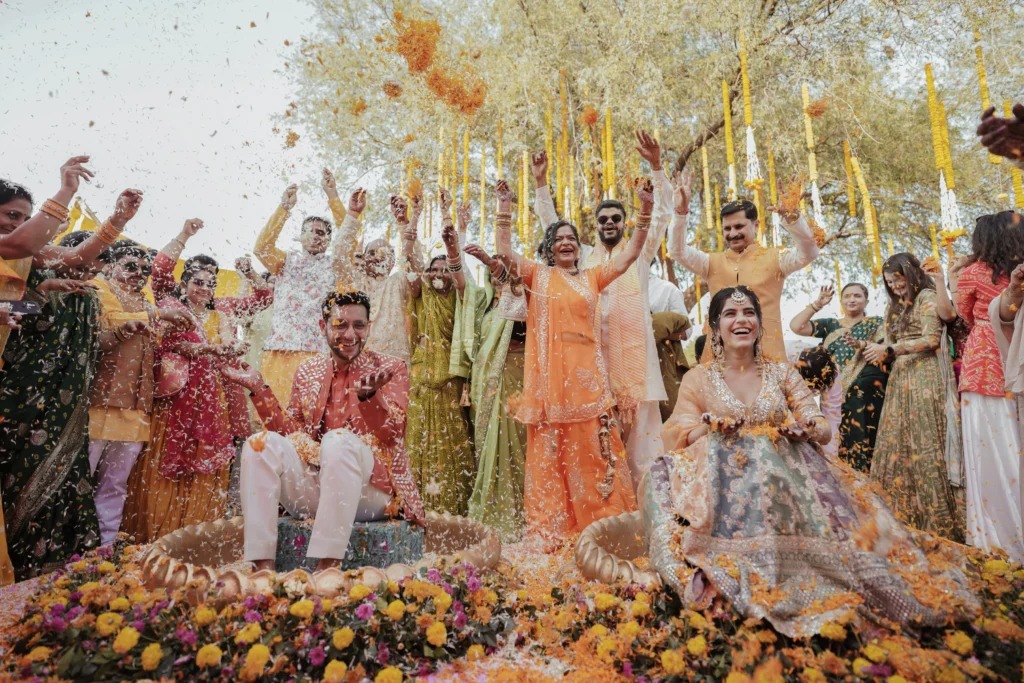
The design itself was deliberate. Aisha had requested motifs inspired by Jaipur's architectural details — the jharokha windows of Hawa Mahal, the geometric patterns of Amer Fort, and tiny elephants hidden among the vines. It took nearly four hours. During that time, her college friends sat in a circle around her, sharing stories, passing around plates of kachoris and jalebi, and occasionally dancing when the dhol player picked up the tempo.
For guests unfamiliar with the ritual, the mehendi is more than decoration. It is a cooling practice, a symbol of joy, and in Rajasthan, a social gathering that can stretch across an entire morning without anyone checking a clock.
If the mehendi was quiet poetry, the sangeet was a full orchestra. The palace's grand ballroom was transformed into a space that felt like a Rajasthani haveli at festival time — jewel-toned drapes, brass lanterns, and a dance floor that could hold exactly the right number of people without feeling sparse.
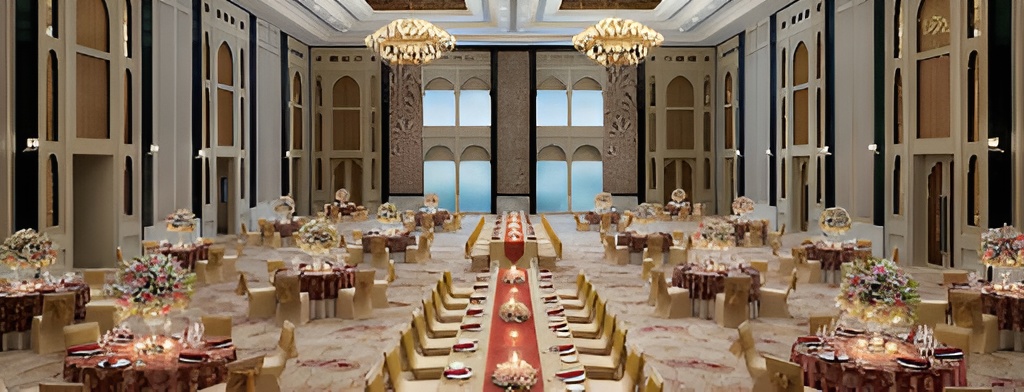
Rohan's family had prepared a choreographed performance that started earnestly and dissolved into chaos by the second song. Aisha's brother surprised everyone with a solo that referenced every embarrassing childhood story he could remember. By midnight, the formal performances had given way to a free-for-all that included the couple's grandparents doing the bhangra. The photographer later said it was his favorite hour of the entire wedding — not because the lighting was perfect, but because no one was performing for the camera anymore.
The wedding day began with a baraat that reimagined tradition rather than repeating it. Rohan arrived on horseback rather than elephant — a practical choice given the palace's narrow entry lanes, but also a personal one. He had grown up riding horses with his grandfather and wanted that memory woven into his wedding day. The procession moved through the palace's private gardens, accompanied by a brass band from the old city and dancers with flaming pots on their heads.
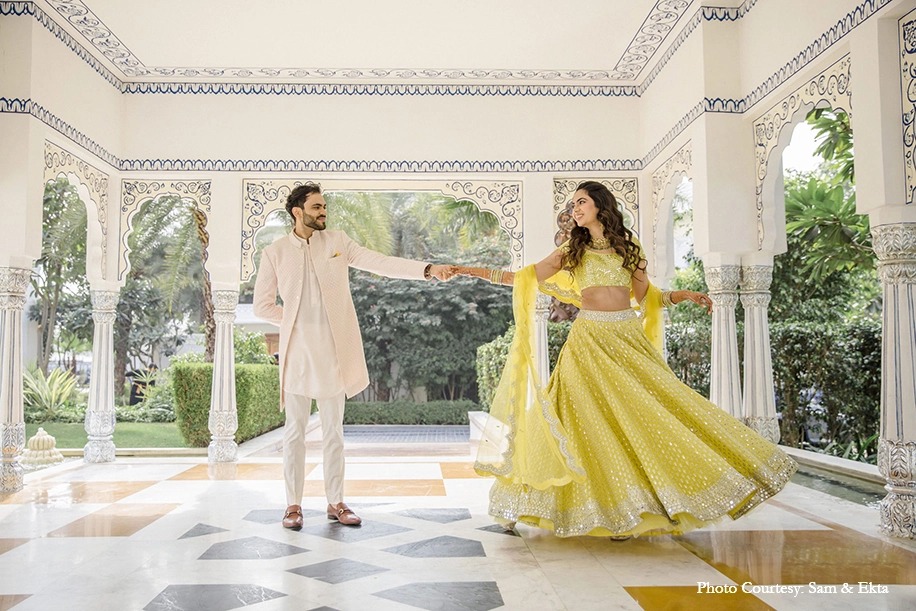
The phera ceremony took place at dusk, which in Jaipur in July means a sky that shifts from gold to violet in the span of twenty minutes. The mandap had been constructed around the ancient banyan tree, its roots incorporated into the design rather than hidden. Marigold garlands hung in thick curtains from the branches above, interwoven with jasmine and strands of warm white light. The floor was covered in rose petals and sandalwood.
The fire was lit as the pandit began the mantras. Aisha and Rohan sat on a low silk-covered platform, their families arranged in a semicircle around them. The ceremony included the traditional seven pheras, each round accompanied by a specific vow — some spoken by the pandit, some whispered between the couple themselves. What struck many guests was the stillness. In a world of wedding livestreams and constant photography, this ceremony felt deliberately analog. Phones were gently discouraged. People watched with their eyes.
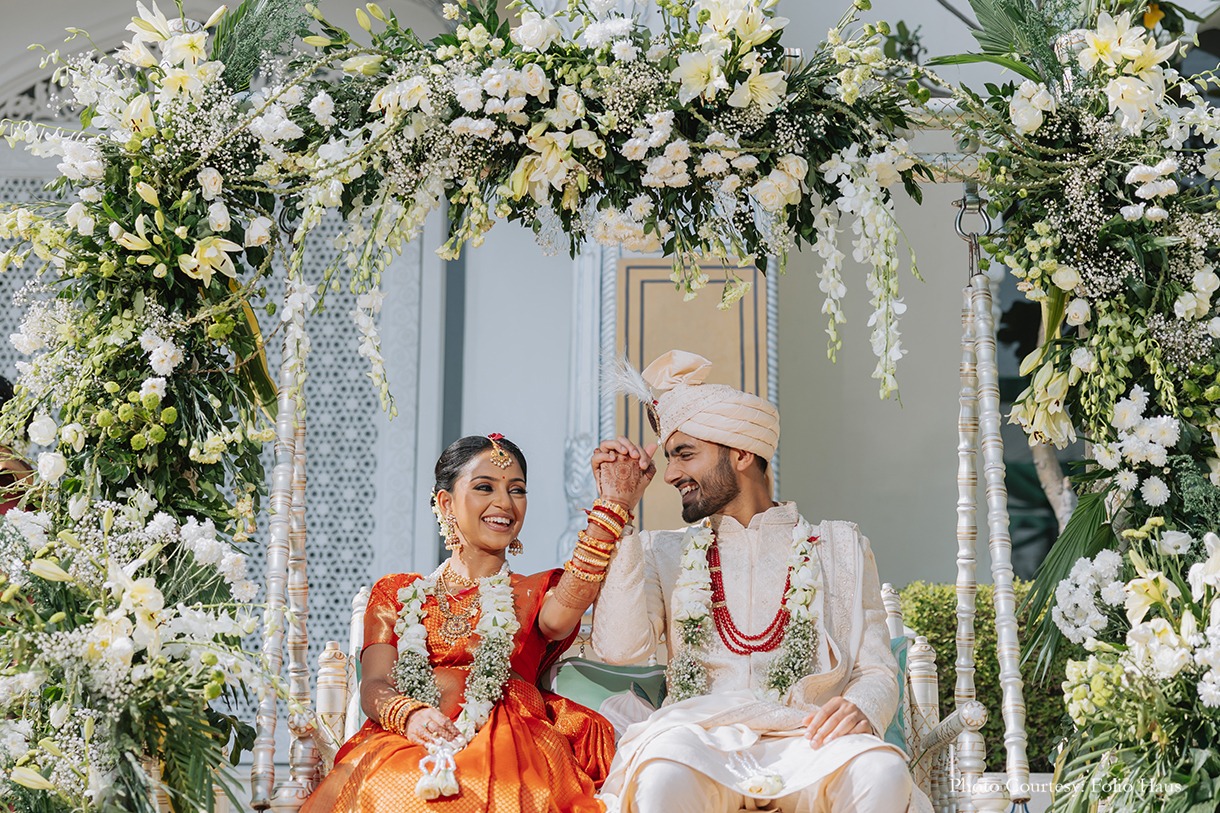
The design direction for this wedding was simple: let the venue speak, and add only what enhanced its voice. The wedding planners in India who coordinated the event worked with local artisans from Jaipur's bazaars — block printers from Sanganer, metalworkers from the old city, and flower vendors who had supplied weddings in the region for three generations.
The color palette drew from the palace itself: sandstone beige, burnt orange, deep maroon, and touches of indigo. The table settings featured hand-blocked napkins, brass vessels, and centerpieces of local seasonal flowers rather than imported blooms. Even the welcome signage was painted on reclaimed wood by a local artist.
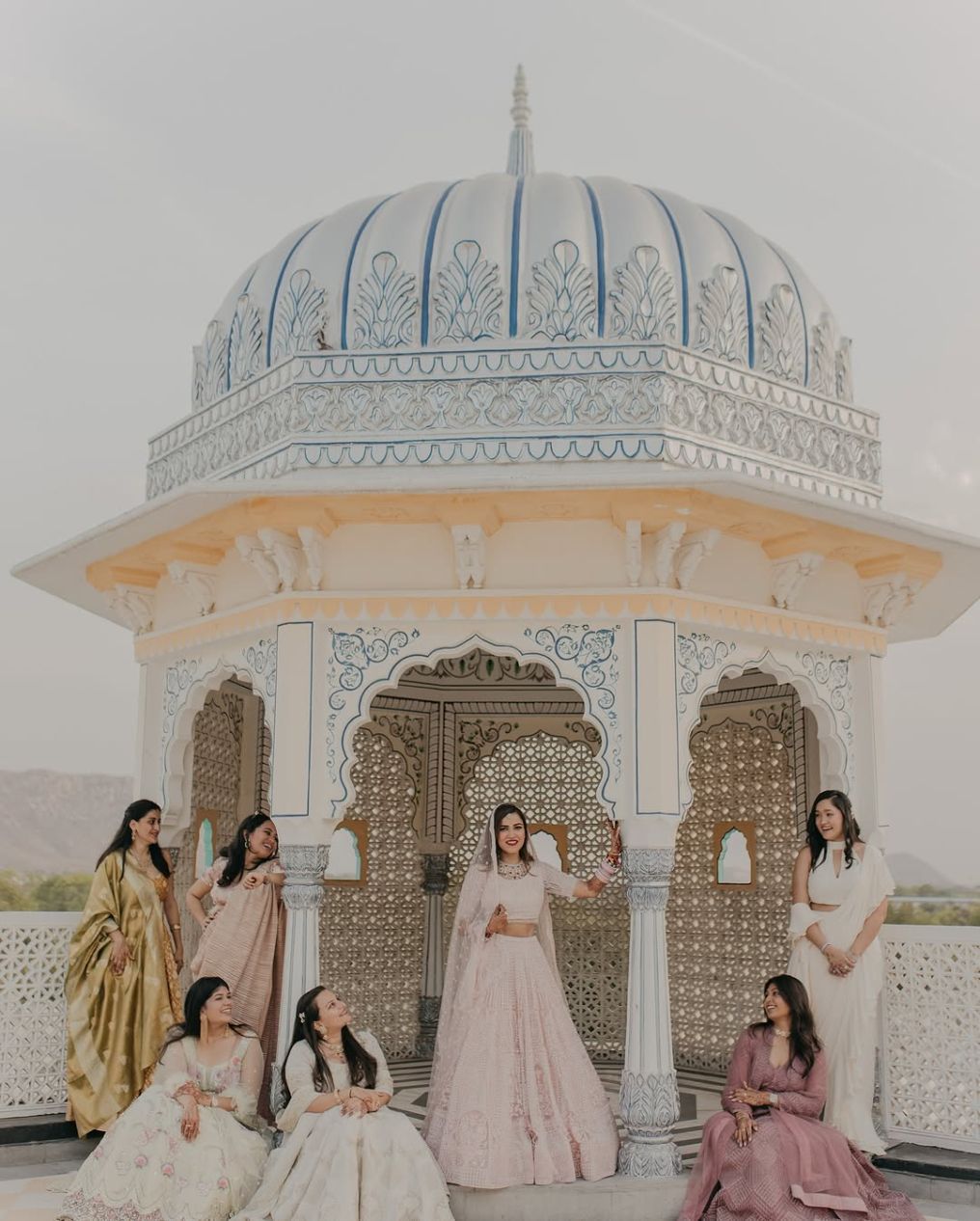
One detail that guests still mention: the pathways between events were lined with small clay diyas that were lit each evening by the palace staff. By the third day, the entire property glowed. It required no electricity, no elaborate rigging — just hundreds of small flames that made the ancient corridors feel alive.
The catering was designed as a journey through Rajasthan rather than a generic Indian wedding buffet. Breakfasts featured poha, jalebi, and fresh lassi. The mehendi lunch included dal baati churma served in traditional clay pots, laal maas for those who wanted heat, and ker sangri — a desert bean dish that most guests had never tried before.
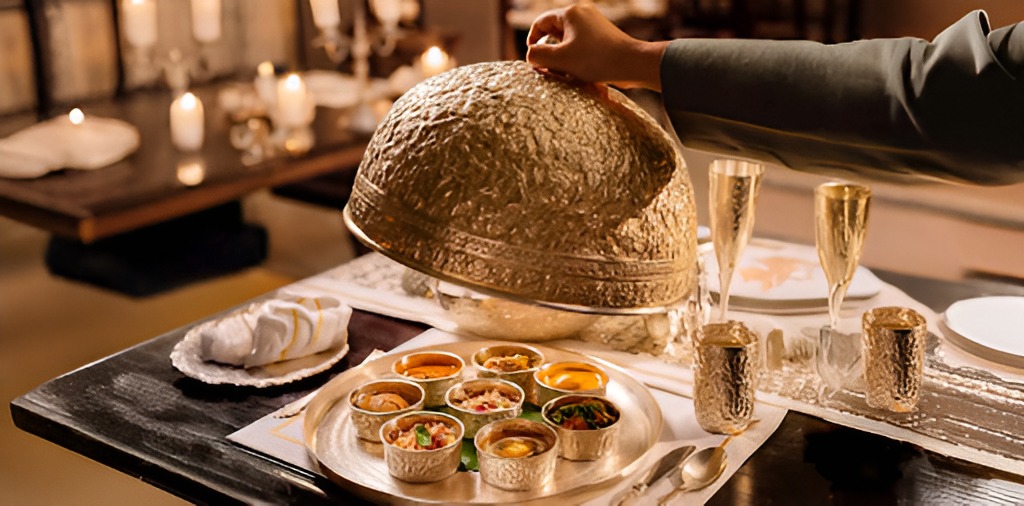
The reception dinner was more elaborate but no less regional. Live cooking stations prepared fresh bajre ki roti, gatte ki sabzi, and ghevar made to order. The bar featured cocktails infused with local ingredients — kachri (a desert melon), rose, and saffron. For guests with dietary restrictions, the kitchen prepared separate Jain and vegan menus without making those guests feel like an afterthought.
What made the food memorable was not the novelty but the consistency. Every meal across three days was thoughtful, hot, and rooted in place.
This is where the story becomes useful for anyone planning a real intimate wedding in Jaipur. The logistics of a destination wedding in Rajasthan involve layers that guests never see.
Guest Accommodation: The Leela Palace Jaipur handled room blocks for the core family, while nearby partner hotels in Civil Lines accommodated additional guests. A shuttle service ran on a fixed schedule, with air-conditioned coaches and bottled water always available. In July heat, this is not a luxury — it is a necessity.
Weather Planning: July in Jaipur is monsoon season. The planning team prepared waterproof tenting for all outdoor events, with fans and misting systems for daytime gatherings. The mehendi lawn had a backup indoor location that was equally beautiful. The phera ceremony was scheduled for dusk partly because temperatures drop significantly after 5 PM.
Vendor Coordination: The photography team was briefed on the couple's preference for candid moments over posed portraits. The makeup artist scheduled trials well in advance, accounting for humidity. The pandit was consulted on the exact muhurat (auspicious timing), which dictated the entire day's schedule. Every vendor was local or had worked in Jaipur before — no one was learning the terrain during the wedding.
Timeline Management: With 200 guests and multiple events, the timeline was built with 30-minute buffers between every transition. This allowed for the inevitable delays — a missing earring, a relative who wanted one more photograph, a sudden rain shower — without throwing the day off course.
Amitesh Fauzdar and the planning team approached this wedding with a philosophy: plan for the worst, design for the best, and never let the guests see the difference.
The final evening was a reception that felt less like a formal dinner and more like a family gathering in the most beautiful living room in Rajasthan. The grand ballroom at The Leela Palace Jaipur, with its soaring ceilings and hand-painted details, needed little adornment. Long tables were dressed in ivory linen, brass candleholders, and low arrangements of roses and tuberose.
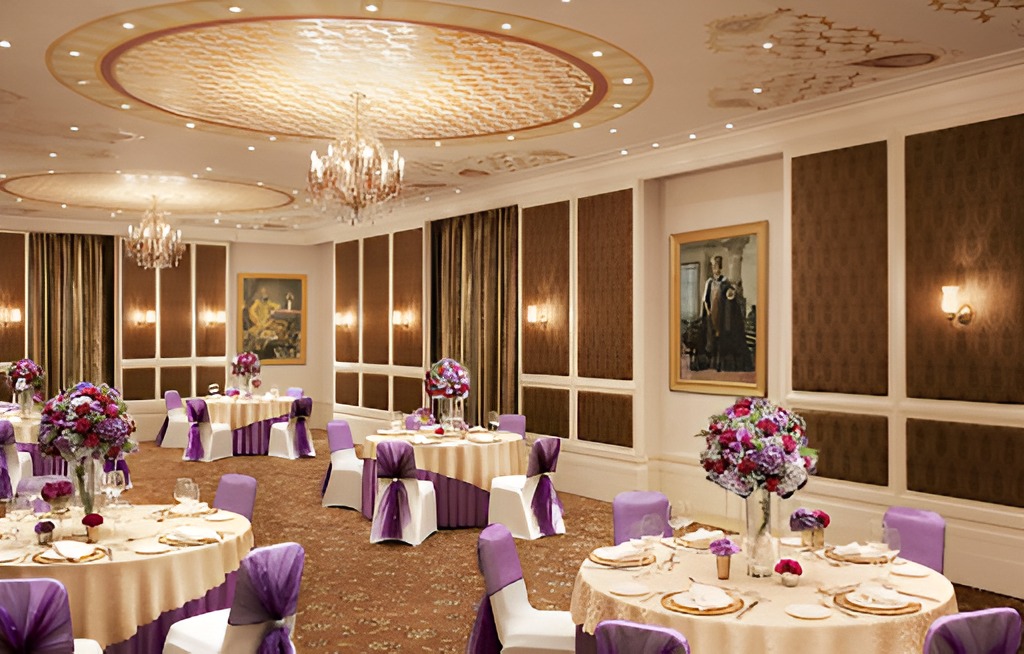
Speeches ran longer than planned. No one minded. Aisha's father spoke about the first time he held her, and half the room reached for tissues. Rohan's best friend told stories that should probably never be repeated, and the other half laughed until their sides hurt. Then the music started — a mix of Bollywood classics, Rajasthani folk, and the one Ed Sheeran song Aisha had requested — and the dance floor did not empty until the palace staff began quietly clearing the last of the champagne glasses.
Aisha and Rohan's wedding was not perfect because nothing went wrong. It was perfect because the things that mattered most to them were protected, and the things that did not matter were allowed to be imperfect.
Here is what other couples can take from this Jaipur wedding story:
On the morning after the wedding, before the guests began departing for the airport, Aisha and Rohan walked the palace grounds one last time. The staff had already begun resetting the lawns, but a few marigold petals still clung to the marble. They stood in the pavilion where the mehendi had been held, now quiet and sun-drenched, and looked at each other. Rohan still had a marigold stem tucked behind his ear from the baraat. Neither of them mentioned it. Neither of them took it out.
That is what a real wedding Jaipur experience looks like. Not a magazine spread. Not a checklist. A story that happens once, in a place that will outlast everyone who was there, and stays with the people who witnessed it long after the flowers have dried and the music has faded.
Jaipur offers a rare combination of palace venues with genuine historical character, excellent hospitality infrastructure, and rich cultural traditions that make every wedding feel truly memorable. The city is well connected by air and rail, while venues like The Leela Palace Jaipur provide the royal backdrop many couples envision for a Rajasthani wedding celebration.
This Jaipur wedding featured around 200 guests, creating the perfect balance between intimacy and celebration. Guest count is one of the first decisions couples make, as it influences the venue, catering, accommodation, logistics, and overall wedding budget.
Traditional Jaipur weddings commonly include the Mehendi ceremony, Sangeet, Baraat, and the sacred Phera ceremony. Many families also organise Haldi, Tilak, or other customs depending on their regional traditions and family preferences.
For luxury venues such as The Leela Palace Jaipur, booking 12–18 months in advance is ideal, especially during the peak wedding season from October to March. Even for off-season weddings, couples should begin planning at least 8–10 months before the event to secure preferred vendors.
Yes. Jaipur offers several heritage havelis, boutique hotels, and restored heritage properties that are perfect for intimate weddings with 50–100 guests. By focusing on priorities such as food, photography, and guest experience, couples can create a memorable celebration without overspending.
Besides The Leela Palace Jaipur, popular wedding venues include Jai Mahal Palace, Rambagh Palace, Samode Palace, and several heritage havelis around Amer and Jaipur's old city. The ideal venue depends on your guest count, wedding style, and overall budget.